Gum Wellness Supplement Claims: A Shopper Evidence Checklist
Learn to question gum-wellness claims, check studied outcomes and know when gum symptoms need dental attention.
Learn to question gum-wellness claims, check studied outcomes and know when gum symptoms need dental attention.
Important: This supplied offer image shows historical advertised prices, savings, bonuses, shipping and guarantee claims that have not been verified for the current seller. These details are not a current offer. Check the live checkout before ordering.
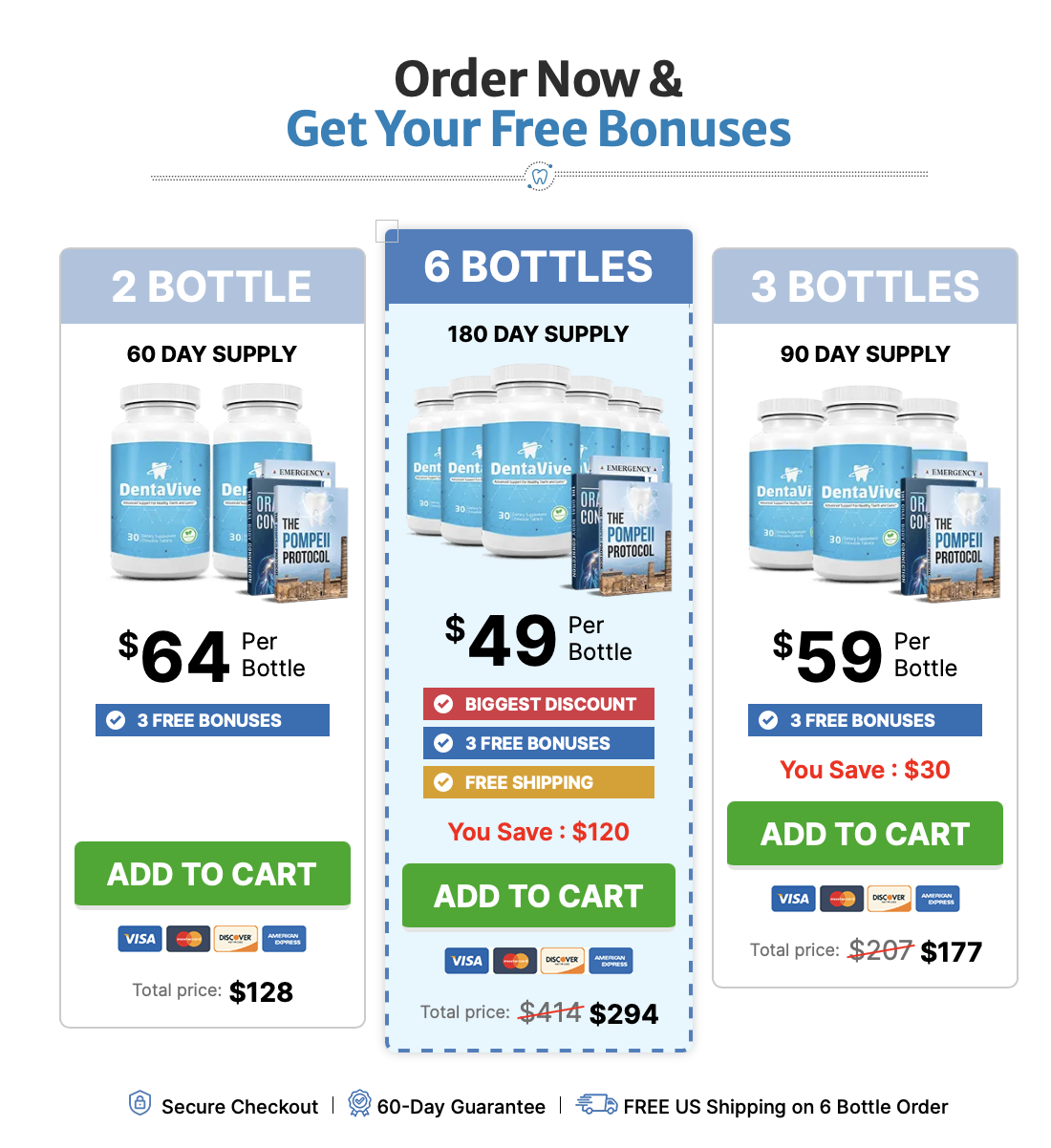
Images are illustrative of the archived promotion only. Check actual package availability and current terms with the seller ↗
Oral-Care Questions and Product Details
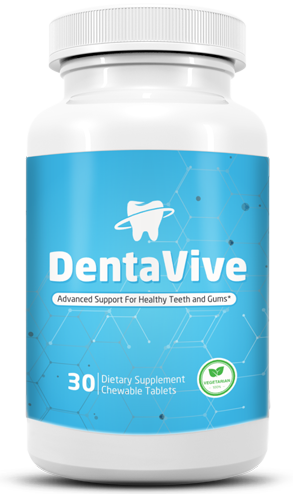
Visuals from the supplied DentaVive reference archive are provided for illustration, not as proof of clinical outcomes or current product specifications.
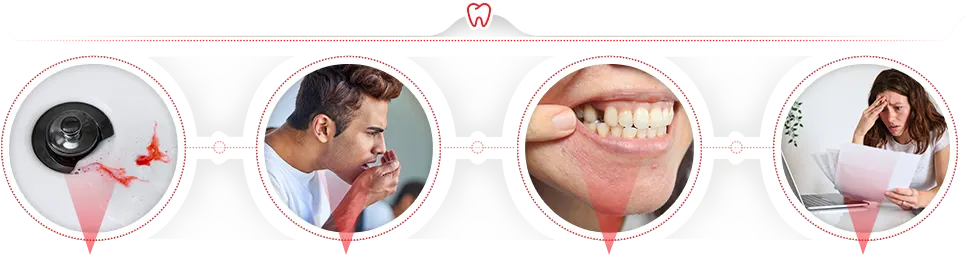

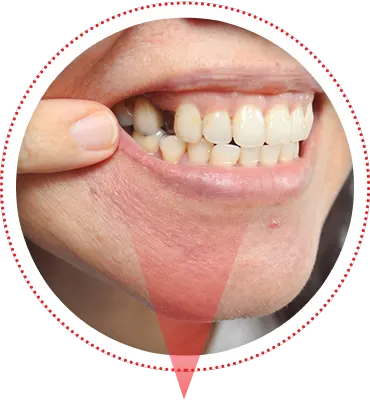
Quick answer: When an oral-health supplement promises “healthier gums,” first identify the measurable result, the people studied, and whether the study tested the exact product being sold. A general claim about bacterial balance is not proof of reduced gum bleeding or treatment of periodontitis. If gums bleed, swell, recede or remain tender, arrange a dental assessment rather than making a supplement purchase your first or only response. [S1]
1. Translate “gum wellness” into something measurable
A phrase such as “supports healthy gums” sounds reassuring, but it can refer to very different things. Is the advertiser discussing comfort, reduced plaque, bleeding on probing, changes in pocket depth, or an unspecified feeling of cleanliness? Ask which outcome the wording actually describes. A buyer cannot evaluate a benefit if the promised result is undefined.
Gum inflammation also differs from a cosmetic issue. Gingivitis may involve bleeding or swelling; more advanced periodontal disease can affect supporting tissues and bone. Neither condition can be assessed reliably from a social-media promise or a product photo. Professionals use examinations and measurements, sometimes including gum-pocket probing or imaging, to diagnose the problem. [S1]
The practical test: rewrite every marketing claim into the sentence “Compared with ___, in ___ people, this intervention changed ___ over ___ weeks.” If the company cannot fill these blanks, the claim may be too broad to guide a purchase.
2. Check whether the outcome matters to the buyer
A laboratory study may show that a microorganism inhibits another bacterium. A human trial might measure changes in a saliva sample. Neither automatically means a person will experience healthier gums. A clinically meaningful endpoint might involve bleeding, plaque, symptoms, pocket depth or another dental measure, with a baseline and comparison group.
An apparent result also needs a denominator: How many participants completed the trial? Were they healthy adults or people already receiving periodontal treatment? Was improvement compared with a placebo or with professional cleaning alone? Were changes large enough to be meaningful? Look for the full study, not only the advertising headline.
Be wary of an ad that changes the subject halfway through: evidence about mouth bacteria is not evidence that a bottle prevents tooth loss. A claim about gum comfort should not be supported only by results about bad breath. The exact endpoint must match the promised benefit.
3. Know when dental care is the priority
The US National Institute of Dental and Craniofacial Research identifies bleeding, swollen or tender gums, loose or sensitive teeth, and persistent bad breath among possible signs of periodontal disease. Plaque can harden into tartar, which requires professional removal. Daily brushing with fluoride toothpaste, between-tooth cleaning and routine dental care remain important. [S1]
If you have repeated bleeding, worsening pain, gum recession or loosening teeth, speak with a dentist. A dentist can identify causes that consumer product labels cannot. A supplement should never be represented as replacing cleaning, diagnosis or treatment. Professional guidance matters especially if you have conditions or medications that affect oral health.
4. What the oral-probiotic evidence can actually support
A 2023 systematic review by Inchingolo and colleagues selected 12 clinical studies investigating probiotics across oral-health outcomes. Some individual studies reported differences in bleeding, pocket depth or other periodontal parameters, including trials in which probiotics were added to professional therapy. Other results were limited, and the studies differed in species, strains, formats, populations, duration and comparison treatments. The authors caution that long-term oral-health use is not firmly established by the available evidence. [S2]
That matters for product shopping. Evidence for Lactobacillus reuteri lozenges, for example, does not demonstrate effects from an unrelated blend, unknown dose or different delivery form. Even two products listing the same species may contain different strains or doses. If a seller cites a research paper, compare its tested formulation against the current Supplement Facts panel and the trial intervention.
5. Six-point gum-claim scorecard
Rate each item Yes, Partial, or Not shown. “Not shown” should trigger a request for evidence, not an assumption that the product failed a trial.
| Question | A useful answer looks like | Flag |
|---|---|---|
| Defined outcome? | Specific bleeding, plaque or other endpoint | “Helps everything” |
| Human participants? | Relevant clinical population and study design | Test tube alone |
| Proper comparison? | Placebo or well-defined standard-care comparison | No comparator |
| Identical formulation? | Exact strains, dose and product tested | Similar ingredient name |
| Adequate duration? | Follow-up relevant to the advertised outcome | Instant-result promise |
| Treatment boundary? | Clear statement that dental care is not replaced | “Avoid the dentist” |
A claim scoring six “Yes” answers deserves closer examination, not automatic acceptance: check whether results were replicated, whether the study had important limitations and whether the merchant accurately describes them.
Important: This supplied offer image shows historical advertised prices, savings, bonuses, shipping and guarantee claims that have not been verified for the current seller. These details are not a current offer. Check the live checkout before ordering.
Images are illustrative of the archived promotion only. Check actual package availability and current terms with the seller ↗
6. Fictional examples: what stronger evidence would look like
Example A (fictional): “Our bacteria help oral wellness.” This provides neither a measured outcome nor a tested product. Ask for a study and a current ingredient label.
Example B (fictional): “In a blinded trial of 90 adults receiving standardized dental care, participants using formulation X for eight weeks had a measured change in bleeding compared with placebo.” This is more testable, but a buyer still needs the study, adverse-event reporting, effect size and confirmation that the advertised bottle is formulation X.
Example C (fictional): “Treats gum disease and replaces professional cleaning.” Such a disease-treatment claim should not be accepted based on probiotic marketing or an ingredient citation. It requires a different level of substantiation and professional attention.
7. A three-minute pre-purchase decision
First, write down the exact gum issue you hope to address. Second, decide if symptoms merit a dental appointment. Third, inspect the current ingredient panel and match the scientific citation to its strain, dose, outcome and participants. Fourth, look for honest limitations alongside positive findings. Fifth, inspect the seller's terms; being scientifically interesting is not the same as being a good purchase.
If necessary facts are unavailable, delay purchase rather than filling the gaps with assumptions. Claims with concrete numbers can still mislead if they refer to unrelated strains, endpoints or study populations.
Frequently asked questions
Can oral supplements replace a cleaning? No. Hardened tartar and some gum conditions require professional care, and routine brushing and cleaning between teeth remain foundational. [S1]
Does a lower bacterial count prove healthier gums? Not necessarily. Microbial measurements can be useful research endpoints, but are not interchangeable with diagnosed disease or clinical recovery. [S2]
What should I ask a seller first? Request the current ingredient label, the published human study supporting the specific advertised gum outcome, and clarification of whether the marketed formulation was tested.
What this means when considering DentaVive
DentaVive can be one of the products a reader encounters while researching oral-care supplements. Its inclusion here is not evidence that its finished formulation achieves the outcomes discussed. We have not independently authenticated a current Supplement Facts panel, strain-level formula, batch test, price, guarantee or seller identity for this draft. Compare any current offer and directions with the actual merchant's checkout and product label before deciding. Neither the research references nor the approved affiliate link supplies those missing confirmations.
Independent-publisher disclosure: If a reader purchases through a link on this site, we may receive a commission. That commercial relationship does not turn this page into an official manufacturer statement or professional dental advice.
Related reading
Sources for editorial checking
- [S1] NIDCR, Periodontal (Gum) Disease: https://www.nidcr.nih.gov/health-info/gum-disease
- [S2] Inchingolo et al., Pharmaceuticals 2023, 16, 1313: https://doi.org/10.3390/ph16091313
- [S3] FTC endorsement guidance: https://www.ftc.gov/business-guidance/resources/ftcs-endorsement-guides-what-people-are-asking
Purchase-image placement instructions — not part of editorial claims
- Immediately after the hero: insert the exact approved three-package CTA artwork, with the approved affiliate URL. A visible notice must explain that prices, discounts, bonuses, shipping and guarantees shown in the historical image are not verified as current. No publication until those representations are authenticated or corrected.
- Repeat the same image and conspicuous notice at the middle buying-decision transition and near the final buying consideration. Use the approved upper-half supporting-image portfolio and reference-matched styling during the later HTML gate.
- Affiliate disclosure next to the CTA: We may earn a commission if you purchase after using our link. We are an independent information publisher, not the merchant.
- The exact approved destination is:
https://6c472sjwdsar8re8hi-45ha48l.hop.clickbank.net/?cbpage=e-comm. - Draft remains
noindex,followuntil the publication gate. Do not imply any image proves product efficacy or offer availability.
Important: This supplied offer image shows historical advertised prices, savings, bonuses, shipping and guarantee claims that have not been verified for the current seller. These details are not a current offer. Check the live checkout before ordering.
Images are illustrative of the archived promotion only. Check actual package availability and current terms with the seller ↗